
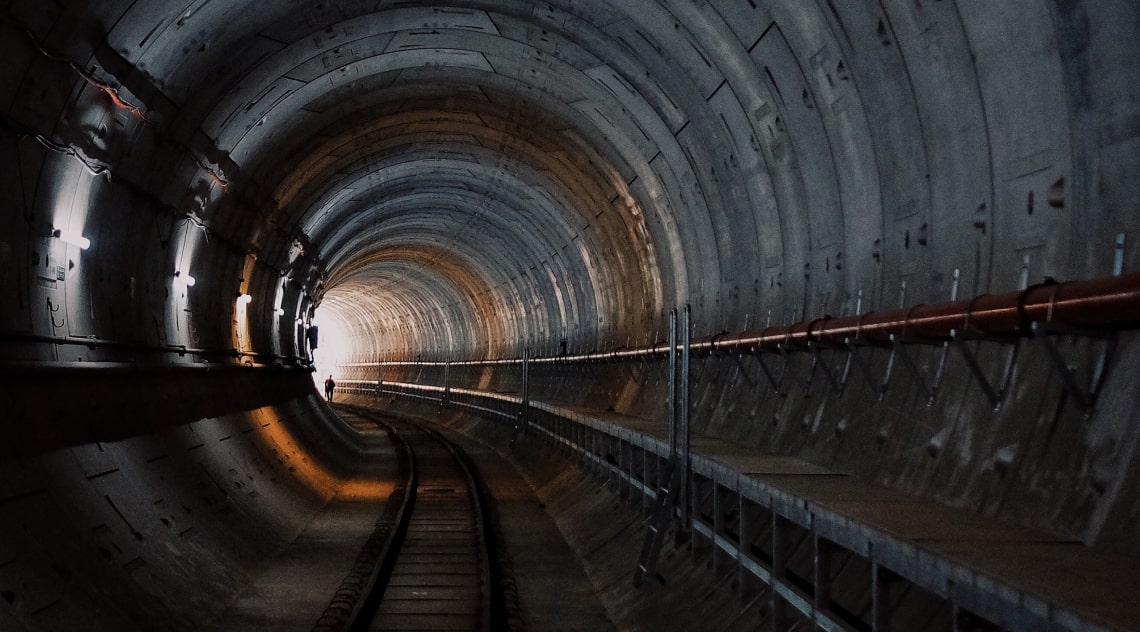

Choosing an electrical contractor for a road tunnel, pump station or other safety-critical transport asset is very different from appointing somebody for a standard commercial building.
The technical electrical work may involve familiar systems such as lighting, distribution, controls, CCTV or alarms, but the environment in which that work has to be delivered changes the level of competence required.
Tunnel assets often have to remain operational around the work. Access can be restricted to short overnight closures. Electrical systems interact with mechanical equipment, ventilation, drainage and emergency infrastructure. A fault can affect far more than one piece of equipment, and every intervention has to be documented, tested and handed back safely.
For asset owners, principal contractors and infrastructure teams, the right question is therefore not simply “Can this contractor carry out electrical work?”, but “Can they deliver and maintain electrical infrastructure safely, reliably and predictably in a live tunnel environment?”
Here are the main things to look for.
Specialist Tunnel M&E Experience
Tunnel electrical work should not be treated as ordinary commercial electrical contracting carried out underground.
Road tunnels contain interconnected mechanical and electrical systems that support both normal operation and emergency response. Depending on the asset, these can include tunnel lighting, emergency lighting, electrical distribution, alarm systems, pumping equipment and much else.
A contractor does not necessarily need to have installed every individual product on your site before, but they should understand how these assets operate as part of a wider tunnel system.
To take an example, replacing a distribution-board component appears on the surface to be an isolated electrical task. In practice, the circuit could support lighting, controls or other equipment that the tunnel operator relies on to maintain safe operation.
Similarly, maintenance on a ventilation asset requires an understanding of both the electrical controls and the mechanical system being controlled.
When assessing a contractor, ask for examples of actual tunnel M&E maintenance, repair or installation work, rather than relying solely on general commercial electrical experience.
Experience in Live Transport and Infrastructure Environments
One of the biggest differences between tunnel work and ordinary electrical contracting is that the site may still be operational around you. Road users need to get places, and access may only be available during a tightly controlled overnight closure.
The contractor has to work around the operational requirements of the asset. If a tunnel is due to reopen at 5am, the work cannot simply continue until it is finished. Testing, reinstatement, paperwork and operational proving all have to be complete before that deadline.
Experience in live transport infrastructure should include an understanding of planned closure windows, traffic-management interfaces, electrical isolation procedures and – crucially – fixed reopening deadlines.
A contractor accustomed to ordinary building work may be technically up to the job, but less familiar with the discipline required when a carriageway must reopen on time.
Planned Preventative Maintenance Capability
A strong tunnel electrical contractor should be able to do more than respond when something fails.
Planned preventative maintenance, or PPM, is fundamental to keeping tunnel infrastructure reliable and reducing the number of emergency interventions required later.
The objective is not simply to prove that an asset worked on the day it was inspected, but also help the asset owner understand how its condition is changing.
Contractors need to help evaluate when a part will fail, looking for increase in corrosion, recurring faults, vibration etc.
These findings can then feed into future maintenance budgets and planned interventions. That allows work to be completed during scheduled access rather than waiting until a fault dictates the programme.
Mechanical and Electrical Capability Across Tunnel Assets
Although this article focuses on tunnel electrical contractors, tunnel infrastructure does not divide neatly into electrical and mechanical boxes.
A ventilation fan is mechanical equipment driven by an electrical motor and controlled by an electrical control system. A pumping station combines motors, pumps, level controls, alarms, distribution and monitoring. Flood protection can involve gates, actuators, sensors, electrical controls and associated mechanical systems.
That is why broader M&E capability can be valuable.
A contractor capable of working across mechanical and electrical infrastructure can help reduce the number of interfaces between different maintenance organisations.
This does not mean one contractor should try to do absolutely everything. It means the team should understand enough of the complete system to identify where an electrical fault ends and a mechanical issue begins, and to coordinate the two properly.
Support for Planned Closures and Tight Working Windows
Road tunnel works often have to fit inside limited overnight or weekend access periods. That makes planning capability just as important as technical competence.
Before the closure starts, the contractor should already know who is attending, what each person is doing, what materials and tools are required, and what happens if the work cannot be completed.
Anything that can be prepared outside the tunnel should be. Equipment can be pre-assembled, materials can be kitted and controls can be configured.
Every activity moved away from the live access window gives the contractor more productive time where it matters.
This also reduces the likelihood of the most expensive outcome: discovering halfway through a closure that a component, tool or approval is missing.
Testing and Handback Must Be Built Into the Programme
A tunnel contractor should understand that the work is not complete when the physical repair or installation ends. The asset has to be proven before it is returned to service.
These handback activities need time allocated to them. If the contractor’s programme uses every available minute for physical installation and leaves commissioning to the very end, the project is immediately exposed to overrun risk.
Experienced teams programme backwards from reopening time and protect the period required for testing and handback.
Multi-Site and Framework Delivery Experience
Many tunnel clients are not responsible for one isolated asset. They may manage multiple road tunnels, pumping stations, underpasses or highways assets across a region or nationally.
That changes what they need from a maintenance contractor. Consistency becomes important. Can the contractor apply the same inspection standard across every site?
Framework and multi-site experience can be particularly valuable where the client needs one contractor to support a portfolio of infrastructure rather than one project. That can make management considerably simpler for the asset owner.
Electrical Registration and Technical Competence
Electrical contractor status should be verified rather than assumed.
Look for appropriate registration with NICEIC, NAPIT or an equivalent recognised electrical certification body, depending on the work involved.
Do not stop at seeing a logo on a website.
Check:
- The contractor’s registration number
- The specific scheme they are registered under
- Whether the registration is current
- What scope of electrical work it covers
- Whether the people carrying out the work have the appropriate competence
The organisation’s accreditation is only part of the picture. Individual engineers also need the qualifications, training and experience appropriate to the work they are undertaking.
For tunnel projects, that may extend beyond electrical qualifications to include site-specific or task-specific competence around isolation, confined environments, lifting, access equipment or particular infrastructure systems.
Insurance and Commercial Assurance
High-risk infrastructure work also needs appropriate commercial protection. Check that the contractor holds suitable levels of public liability insurance, employers’ liability insurance, and professional indemnity insurance where design or professional services are included
The exact values required will normally be dictated by the client or contract.
Professional indemnity is particularly important where the contractor is taking responsibility for design, specification, engineering recommendations or other professional advice rather than simply installing from a completed design.
Other documentation may include:
- Company health and safety policies
- Quality procedures
- Environmental policies
- Financial information
- Supply-chain approvals
- Training records
- Insurance certificates
For principal contractors, this is part of confirming that the specialist subcontractor can be safely and commercially integrated into the wider project.
Manufacturer-Approved Installer Status
Many tunnel systems use specialist proprietary equipment, from lighting and CCTV to control equipment.
For some products, manufacturer-approved installer status can provide useful assurance that the contractor has been trained to install or maintain the equipment correctly.
This should not be treated as a universal requirement for every component – But where a project depends on specialist equipment, ask whether the contractor has the manufacturer’s support and whether any approval is required to maintain warranties or achieve compliant commissioning.
UK Geographic Coverage
For clients managing infrastructure across multiple regions, geographic reach can make a meaningful difference.
A contractor supporting only one local area may be entirely suitable for an individual project.
For a regional or national framework, the requirements change.
The client may need planned teams across multiple sites.
Consistent maintenance standards, central reporting, specialist engineers capable of travelling and support for simultaneous projects are also key.
UK-wide coverage can make it easier to maintain one delivery model across a wider portfolio rather than appointing different contractors for every location. The important question is whether that national coverage is genuinely deliverable.
Ask where engineers are based, how reactive attendance is resourced and how multi-site programmes are managed.
Why Hybrid Electrical Solutions Is a Strong Fit
Hybrid Electrical Solutions supports mechanical and electrical infrastructure across road tunnels, highways and other critical transport environments.
Our experience includes delivering M&E maintenance, repair and project works in operational infrastructure where access is restricted, closure windows are tightly controlled and safe handback is essential.
Our capability includes:
- Planned preventative maintenance
- Reactive support for contracted sites
- Tunnel electrical maintenance and repair
- Mechanical and electrical asset capability
- Lighting and power systems
- Ventilation and associated controls
- Pumping and flood-protection infrastructure
- Asset inspection
- Defect identification
- Detailed condition reporting
- Remedial recommendations
- Planned closure support
- Multi-site project delivery
- Electrical registration and competent engineering teams
- Relevant health and safety accreditations
- Appropriate insurance
- UK-wide coverage
We understand that the job is not simply to repair the asset.
The work also has to fit the operational environment around it.
That means arriving prepared, working safely within the available access, testing as the project progresses, maintaining accurate records and handing the infrastructure back on time.
For longer-term maintenance arrangements, we can also help clients move from reactive fault repair towards structured inspection, PPM and asset-condition reporting, creating a clearer picture of what needs attention now and what should be planned for later.
Discuss Tunnel Electrical Maintenance or Repair Support
The best time to assess a tunnel electrical contractor is before a critical asset fails.
Whether you are procuring a planned maintenance framework, preparing works for an upcoming closure or dealing with a recurring electrical defect, the contractor should understand the full operational context of the asset rather than viewing the job as an isolated electrical task.
Hybrid Electrical Solutions can support road tunnels, pump stations and wider transport infrastructure with planned preventative maintenance, inspections, electrical and mechanical repairs, remedial works, upgrades, project support and contracted reactive response.
Speak to our team about your tunnel assets, maintenance requirements and upcoming work programme, and we can help establish the appropriate scope, access strategy and level of ongoing support.