
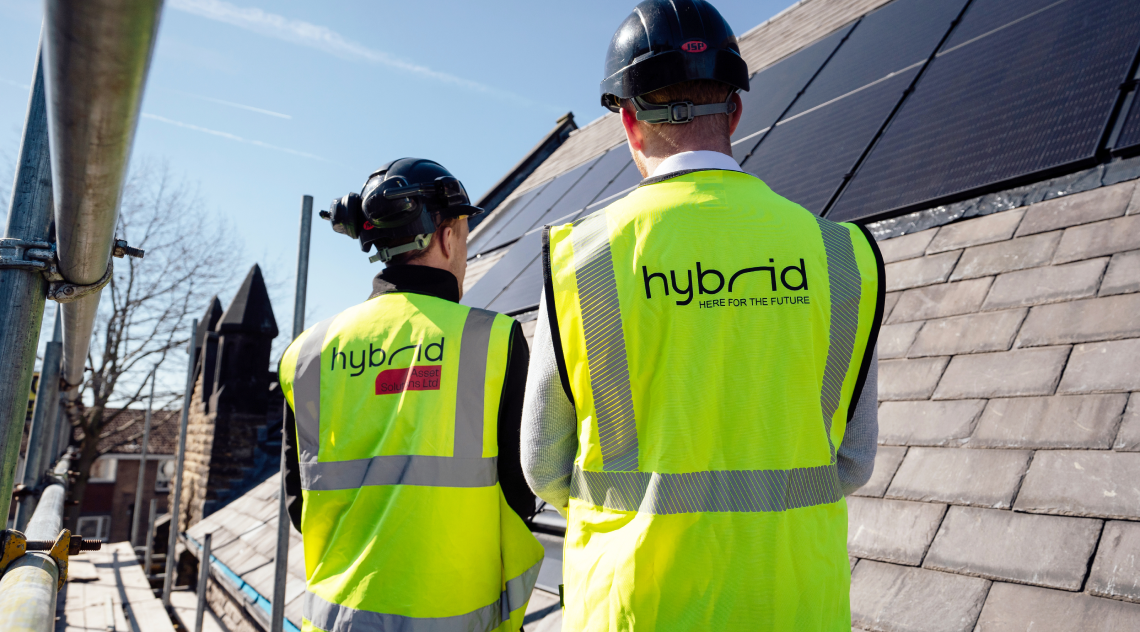

Benefits of Installing Solar Panels
Commercial solar panels can help businesses reduce energy costs, improve sustainability performance and protect themselves from long-term energy-market uncertainty. A well-designed system can generate electricity during working hours, when many businesses have the greatest demand.
Key benefits include:
- Reduce operating costs by generating your own electricity on site.
- Protect against future energy price increases by reducing the amount of electricity purchased from the grid.
- Strengthen ESG performance with measurable carbon-saving data.
- Support carbon-reduction targets for tenders, reporting and stakeholder requirements.
- Improve energy resilience when combined with battery storage and smart energy management.
- Improve long-term asset value by investing in lower-carbon building infrastructure.
The value of solar depends on your building, electricity use, tariff, system size, roof space and how much generated electricity you can use on site. Hybrid will model these factors as part of your proposal.
Find out how commercial solar could support your business.
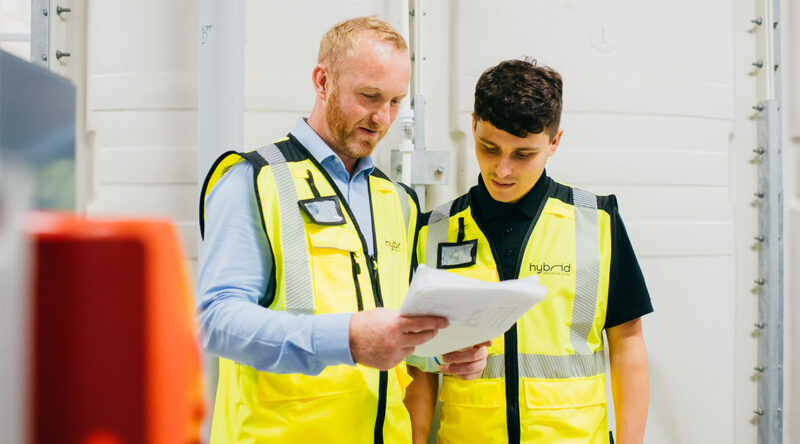
Solar Panels with Battery Storage
Battery storage allows your business to store surplus solar electricity generated during the day and use it later when demand is higher or solar generation is lower. This can increase the amount of solar energy used on site and reduce reliance on grid electricity during more expensive periods.
For commercial sites, battery storage can be particularly useful where electricity demand continues outside daylight hours, where peak-time charges are a concern, or where a business wants to manage energy use more strategically. Batteries can also support EV fleet charging by storing lower-cost or self-generated electricity and releasing it when vehicles need to charge.
A battery may help your business:
- Use more of the electricity generated by your solar panels.
- Reduce electricity imported during peak-rate periods.
- Support evening or overnight energy demand.
- Improve EV fleet charging flexibility.
- Reduce pressure on the grid connection during busy periods.
- Support a wider energy-management strategy.
- Improve the commercial return from a solar PV system.
Battery storage is not right for every site. Hybrid will assess your electricity usage patterns, solar generation forecast, peak demand, EV charging requirements and available space before recommending whether battery storage should be included.
How much could your business save?
The savings from commercial solar panels vary significantly from site to site. The strongest returns are often achieved by businesses that have high daytime electricity use, suitable roof space, limited shading and the ability to use a large proportion of the electricity generated on site.
A commercial solar proposal should model system size in kWp, estimated annual generation, current electricity costs, exported electricity, and much else.
As a guide, many commercial solar projects are assessed over a multi-year payback period rather than through a single headline saving. A warehouse, factory or office using most of its electricity during daylight hours may achieve a stronger return than a site with low daytime demand. A site with battery storage or EV charging may also achieve different savings depending on when energy is generated, stored and used.
Hybrid can provide energy savings modelling, ROI scenarios and export assumptions as part of the survey and proposal stage, so your business can understand the likely financial case before committing.
See how much commercial solar panels could save your business.
How the process works
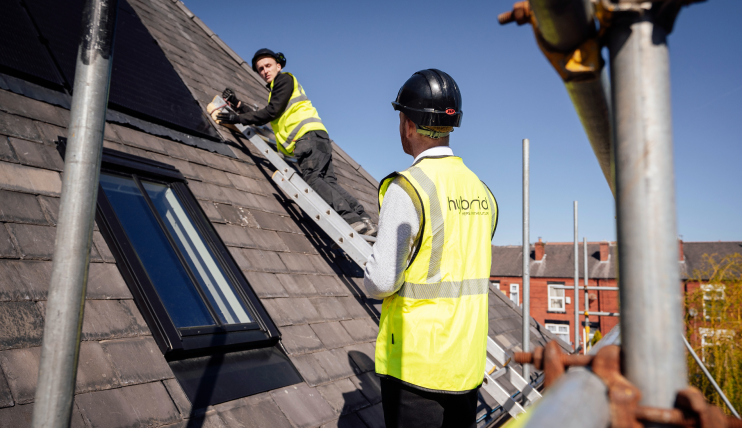
During the free and quick survey we will review the property type, roof type & pitch, desired solar type (in roof or rails), solar panel location, inverter location and the usage of electricity over the last 6 months.
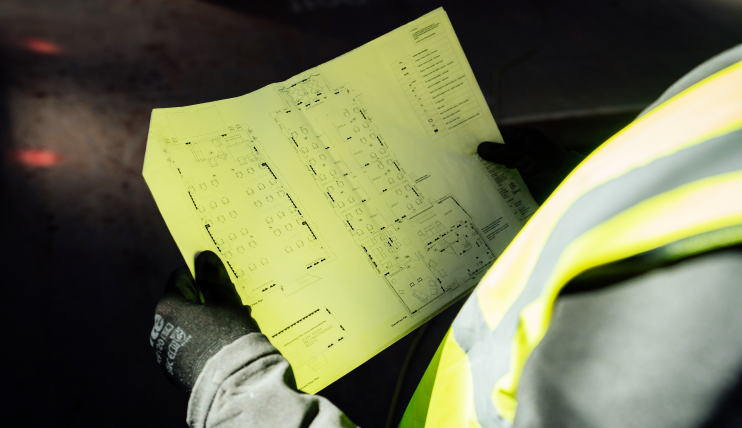
Based on the survey, the Hybrid team will establish the most suitable solution for your property, let you know the benefit to you in terms of ROI, and provide you with a quote for you to review.
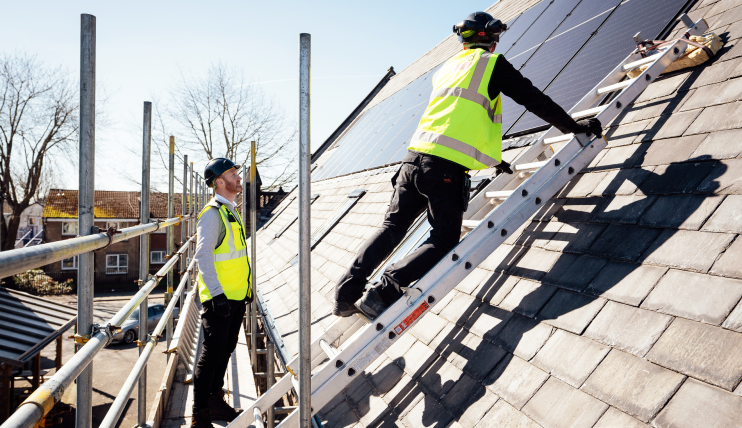
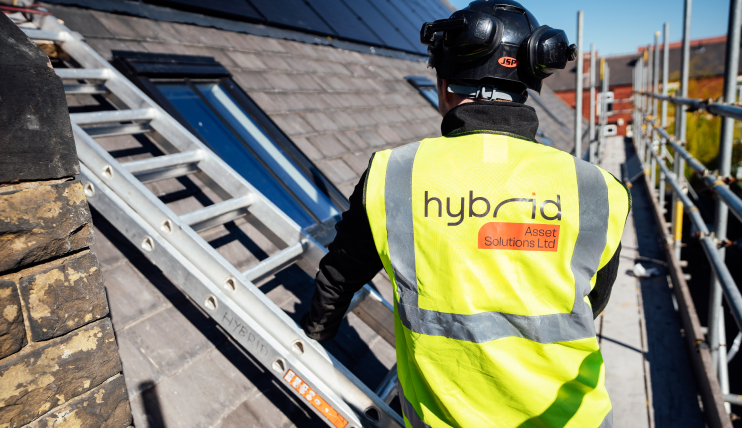
The installation process will include the setup of the scaffold, installing the solar panel mounts and the panels, wiring of the solar panels and connecting the converter to the consumer unit.
Hybrid will then carry out a test on the solar panels, switching them on and ensuring each panel is working correctly.
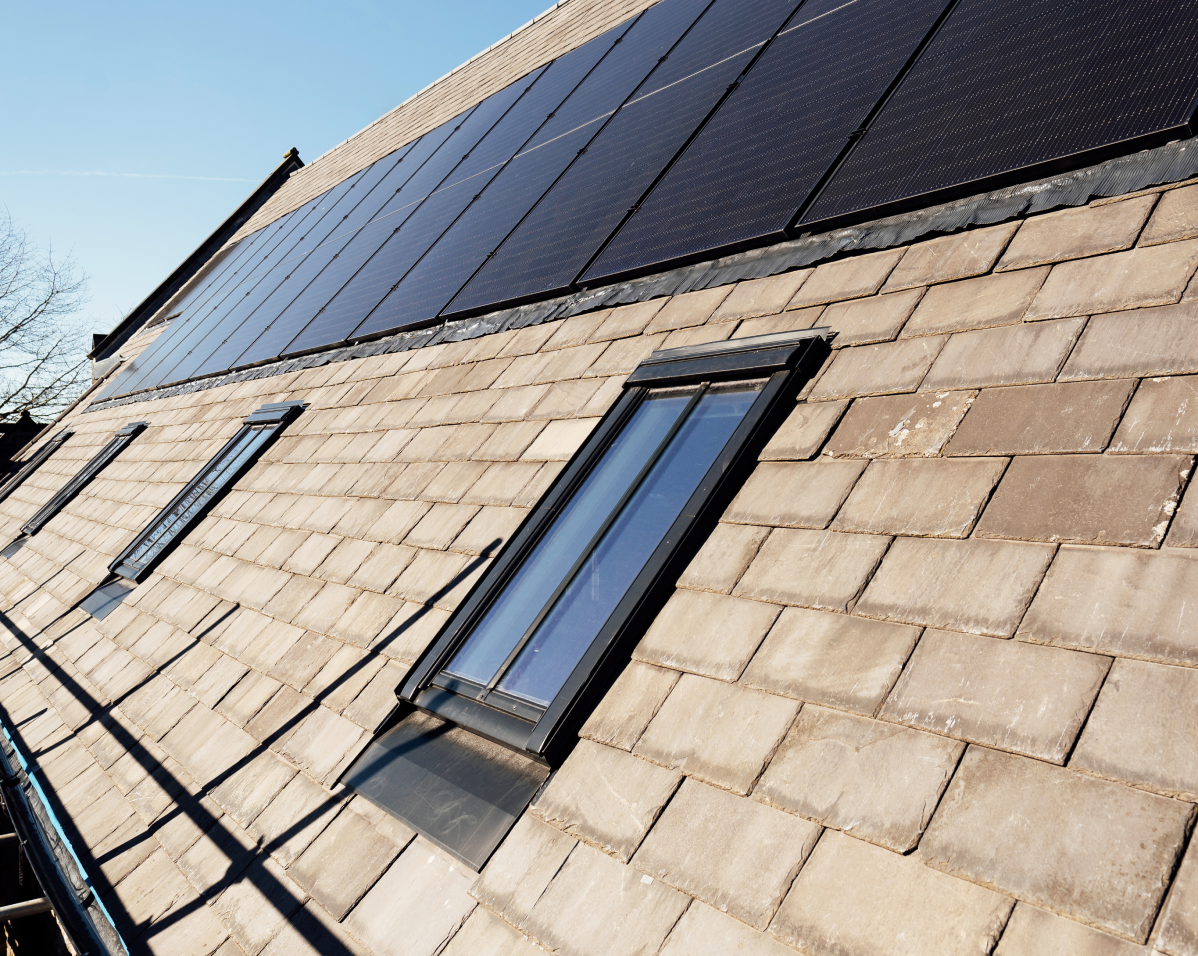
Why Choose Hybrid Electrical Solutions for Solar Panel Installation?
The right commercial solar partner should offer more than panels on a roof. A successful installation requires electrical expertise, system design, safe working practices, grid-connection knowledge, project management and ongoing performance support.
Reasons to choose us include:
- MCS certification
- RECC
- NICEIC Accredited
- Constructionline Gold
- SFG20
- REFCOM
- GAS Safe
- ISO:9001
- Public liability insurance
- Workmanship guarantee
- Manufacturer-backed warranties for panels, inverters and batteries
- Documented health and safety processes, including RAMS and CDM compliance
- Experience with commercial and industrial installations
- Number of commercial installations completed
- Full detailed project report
- Training provided if required
- Dedicated project management
- Grid application support, including G98, G99 and G100 where applicable
- Ongoing maintenance packages and performance monitoring
- Support with ESG reporting and carbon-saving calculations
- Ability to integrate solar PV with battery storage and EV charging infrastructure
We support your business from early feasibility through to installation, commissioning and aftercare, helping you make a confident decision about solar investment.
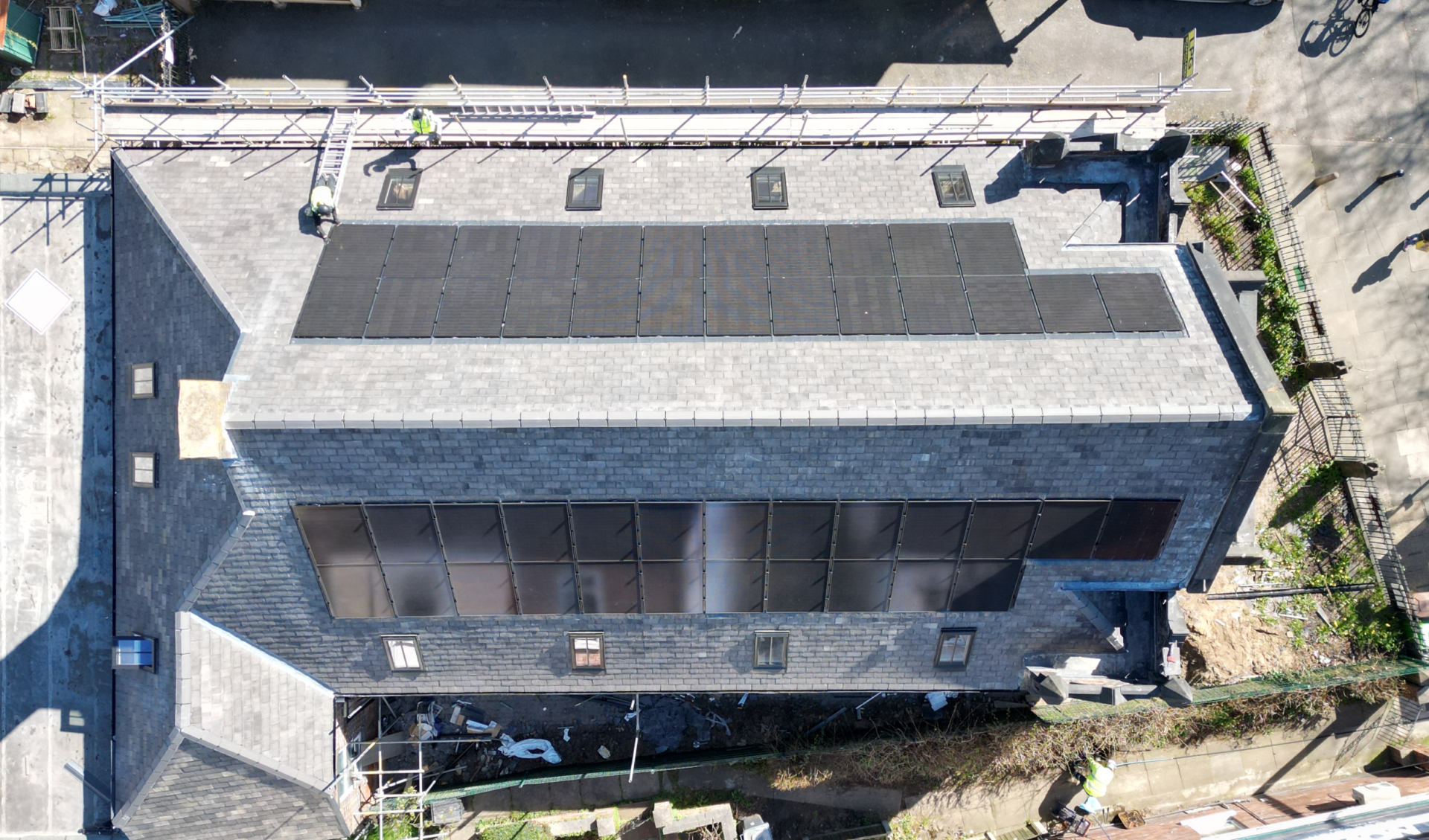
Case study - Commercial Solar PV Installation
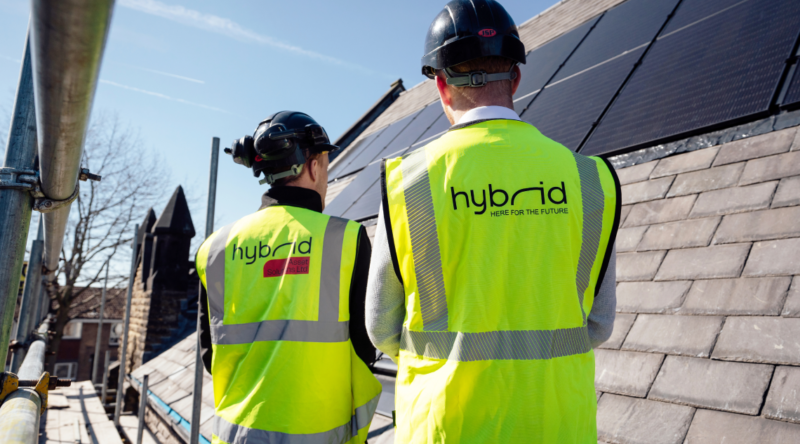
Hybrid Asset Solutions was appointed to design and propose a rooftop solar PV system for a commercial site in Ellesmere Port, with the aim of reducing the client’s reliance on grid electricity and improving long-term energy cost certainty.
FAQs
Is my property suited for Solar Panels?
Do I need planning permission for commercial solar panels?
Do I need to maintain solar panels?
How do Solar Panels work?
Do solar panels work in winter and cloudy weather?
How many solar panels will I need?
Do I need a solar battery?
Can I sell electricity to the grid?
How much could I save with commercial solar panels?
Are financing or grants available for commercial solar panels?
Is my property suited for Solar Panels?
It’s unlikely a property is unsuitable for solar panels. South-facing rooftops produce the maximum electrical output. A system facing East or West will only yield around 15 – 20% less energy than one facing directly South. Hybrid Asset Solutions can carry out a free solar panel installation survey to find out the best place for your solar panels.
Do I need planning permission for commercial solar panels?
Many commercial solar panel installations in England are classed as permitted development, so a planning application is not normally required. However, limits and conditions apply, and different rules may affect listed buildings, conservation areas, leasehold properties, ground-mounted systems, protected sites or unusual installations.
Planning permission is separate from grid connection. We will identify the applicable G98, G99 or G100 connection process and explain what is included in the service before installation begins.
Do I need to maintain solar panels?
Once the solar panels are installed, there’s little maintenance required. Hybrid however would recommend that you check the panels once or twice a year, to ensure that dirt hasn’t piled up and potentially clean them if required.
How do Solar Panels work?
Essentially, the system is made up of a few key components: solar panels, racks to mount them on your roof, electrical wiring, and an inverter. From sunrise to sunset, the solar panels soak up energy from the sun and convert it into direct current (DC) electricity. This DC electricity is then sent to the inverter, which converts it into alternating current (AC) electricity—the kind that your home uses.
The renewable power is then delivered straight to your home’s main electrical service panel, where you and your family can use it just like you would with traditional electricity.
It’s never been easier, or cheaper to switch to Solar power!
Do solar panels work in winter and cloudy weather?
Solar panels generate electricity from daylight, so they can still work in winter and cloudy conditions. Output will usually be lower when daylight levels are reduced, but a well-designed system can still generate useful electricity throughout the year.
We estimate annual generation as part of your proposal, taking account of roof orientation, shading, system size and seasonal variation.
How many solar panels will I need?
The number of panels depends on your electricity usage, available roof space, system size, panel wattage, roof orientation, shading and grid-connection constraints. A small office may need a very different system from a warehouse, factory, school or commercial estate.
During your survey, we will assess your site and provide a recommended system size based on your current and future energy requirements.
Do I need a solar battery?
Not always. If your business uses most of its electricity during daylight hours, you may already be able to use a large proportion of the power generated by your solar panels. A battery may be useful if you want to store excess solar energy, reduce peak-time grid use, support EV charging or improve on-site self-consumption.
We can model both solar-only and solar-plus-battery options so you can compare cost, savings and payback.
Can I sell electricity to the grid?
Yes, eligible businesses can export unused electricity to the grid and may receive payment through an export tariff such as the Smart Export Guarantee. You will not normally be paid for electricity you use on site, only for electricity exported.
Export income depends on your supplier, export tariff, metering setup, system eligibility and how much surplus electricity your site generates. We can include export assumptions in your proposal.
How much could I save with commercial solar panels?
The amount your business could save depends on your electricity usage, current tariff, system size, daytime demand, export rate, maintenance costs and whether battery storage is included.
A high-consumption business that uses electricity during daylight hours may see a stronger return because more generated power is used directly on site. Sites with lower daytime consumption may export more electricity, which can still generate revenue but may produce a different payback profile.
We provide example ROI scenarios, estimated annual generation, energy savings modelling, SEG or export projections and typical payback calculations as part of your commercial solar proposal.
Are financing or grants available for commercial solar panels?
Funding options can change over time and may depend on your business type, location, sector, building ownership and project size. Some businesses may choose to purchase a system outright, finance the installation or explore available schemes, tax treatment or capital allowances.
We can discuss available options at the proposal stage, put you in touch with our funding partners, and help you understand which funding routes may be relevant to your project.
Get in touch
Interested in having solar panels installed at your property? Fill in the form below or contact the team today to discuss the option of a free survey:
Call: 0333 358 0098
Email: contact@hybridsolutionsgroup.co.uk