

A common scenario for businesses with solar panels and EV chargepoints installed is to power one with the other. For many businesses, combining commercial solar PV with EV chargepoints can be a practical way to reduce reliance on grid electricity, support lower-carbon transport and make better use of energy generated on site.
However, the right setup depends on your building, vehicle usage, available roof space, charging demand and electrical infrastructure. Solar panels can support EV charging, but the system needs to be designed carefully so that generation, storage, grid supply and charger demand work together.
This guide explains how solar-powered EV charging works, when it makes sense and what businesses should consider before installing commercial solar panels and EV chargepoints.
How Does Solar-Powered EV Charging Work?
Solar panels generate electricity during daylight hours. That electricity can be used by the building, exported to the grid, stored in a battery or directed towards EV chargepoints.
In a commercial setting, solar PV is usually connected to the site’s electrical system. When the panels are generating, the electricity can help supply normal building demand and any EV chargers in use at the time.
If vehicles are plugged in during the day, some of their charging demand may be met directly by solar-generated electricity. If the solar panels are producing more electricity than the building and chargers are using, the surplus may be exported or stored in a battery for later use.
Can EV Chargers Run Entirely on Solar Power?
In some situations, EV charging can be partly or mostly powered by solar panels. However, most commercial sites still use the grid as part of the charging setup.
This is because solar generation changes throughout the day and year. Output is affected by daylight, weather, roof orientation, shading and system size. EV charging demand may also vary depending on how many vehicles are plugged in, how quickly they need to charge and when they are parked on site.
For most businesses, the practical aim is not to disconnect EV charging from the grid. The aim is to use as much solar-generated electricity as possible, reduce imported electricity and design the system around real site demand.
When Does Solar EV Charging Make the Most Sense?
Solar EV charging can work especially well where vehicles are parked during daylight hours. This can include workplaces, offices, business parks, fleet depots, warehouses, public-sector estates, schools, colleges and commercial sites with staff or visitor parking.
If staff vehicles, pool cars or fleet vehicles are plugged in while the solar panels are generating, the site can use more of its own electricity rather than exporting it or buying as much from the grid.
Solar EV charging may also make sense where a business has high daytime electricity use. In this case, solar panels can support both the building and the chargepoints, helping the business make better use of the system across the site.
What If Vehicles Charge Overnight?
Many fleet vehicles are charged overnight, especially vans or company vehicles that are used during the working day. In this case, solar panels will not directly power the vehicles unless battery storage is included.
A battery can store surplus solar electricity generated during the day and make it available later. This can help support evening or overnight charging, depending on the battery size, vehicle demand and site energy use.
However, battery storage is not automatically required for every EV charging project. It adds cost and should be assessed carefully. For some sites, solar PV alone may provide strong value by reducing building electricity costs during the day, while EV charging continues to use grid electricity when needed.
The Role of Battery Storage
Battery storage can increase the value of solar-powered EV charging by improving self-consumption. Instead of exporting surplus solar electricity, the site can store it and use it later when vehicles need to charge or when grid electricity is more expensive.
This can be useful for fleet depots, workplaces with late-afternoon charging demand, commercial sites with evening operations or businesses looking to manage peak-time electricity use.
Battery storage can also support load management. It may help reduce pressure on the site’s incoming supply by providing additional stored energy during periods of higher charging demand.
The right battery size depends on the solar PV system, site demand, charging schedule, tariff structure and future plans. A proper design should compare the financial and operational case for solar-only, EV-only and solar-plus-battery options.
Do You Still Need a Grid Connection?
Most commercial EV charging systems still need a grid connection. Solar panels can reduce how much electricity is imported from the grid, but the grid provides backup when solar generation is low or charging demand is higher than on-site generation.
This is important for reliability. A business cannot usually rely on solar generation alone to ensure that vehicles are always charged when needed, especially during winter, cloudy periods or high-demand charging sessions.
The best approach is usually a blended system: solar PV to generate on-site electricity, grid supply for reliability, battery storage where it makes commercial sense, and load management to control demand.
How Load Management Helps
Load management is important when EV charging is added to a commercial site. It controls how much power the chargers use and helps prevent the site from exceeding its available electrical capacity.
Dynamic load management can distribute available power between chargers, the building and other site loads. If demand is high, the system can reduce charger output. If more power is available, chargers can operate at a higher rate.
When solar panels are included, load management can help the site make better use of generated electricity. It can prioritise charging when solar output is strong, reduce grid demand and support future expansion without immediately requiring a major supply upgrade.
Solar Panels, EV Charging and Electrical Capacity
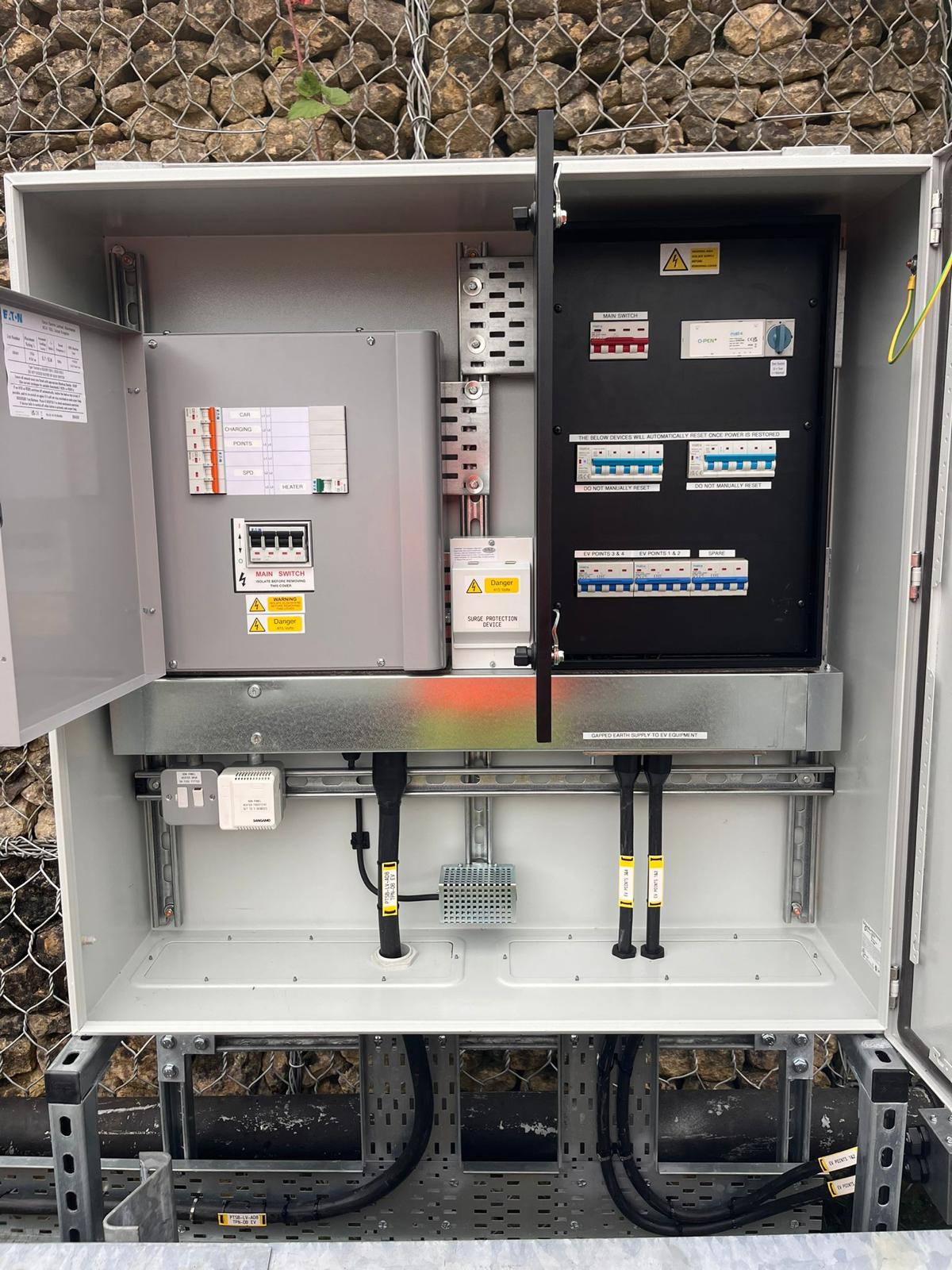
Before installing solar panels and EV chargepoints together, the site’s electrical capacity needs to be assessed. This includes reviewing the incoming supply, distribution equipment, existing demand, cable routes, charger locations and potential export arrangements.
EV chargers add demand to the site, while solar panels add generation. Battery storage can add another layer of complexity because it may charge and discharge at different times.
A good design should consider how these systems interact. The installer should assess whether distribution equipment needs upgrading, whether a DNO application is required, how load management will work and whether the system can be expanded in future.
Benefits of Combining Solar Panels and EV Charging
Combining commercial solar panels with EV chargepoints can offer several benefits for businesses.
It can reduce reliance on grid electricity by allowing the site to use more electricity generated on site. It can support lower-carbon transport by helping charge electric vehicles with renewable electricity. It can also improve the value of a solar PV system by increasing self-consumption.
For workplaces, solar EV charging can support staff benefits, ESG reporting and sustainability targets. For fleet operators, it can form part of a wider plan to reduce vehicle emissions and manage operating costs. For landlords and commercial property owners, it can improve site infrastructure and support tenant demand for lower-carbon facilities.
Challenges to Consider
Solar-powered EV charging needs careful planning. One common challenge is that solar generation and charging demand do not always align. If vehicles are not parked during daylight hours, the site may need battery storage or grid electricity to meet charging needs.
Another challenge is electrical capacity. Rapid or ultra-rapid chargers can place significant demand on the site, which may require upgrades or load management.
Roof suitability also matters. The building needs enough usable roof space, suitable orientation, limited shading and a roof condition that can support the solar PV system. For landlords or leased sites, permissions and responsibilities should also be checked early.
Is Solar EV Charging Suitable for Workplaces?
Solar EV charging can be a strong fit for workplaces because staff vehicles are often parked during the day. This means charging demand may overlap with solar generation.
A workplace might use solar PV to support staff charging, visitor charging, company cars or pool vehicles. Charging can be free, paid or restricted through access control, depending on the business policy.
For best results, the system should be designed around real parking behaviour. The business should consider how many vehicles are likely to charge, how long they stay parked, whether drivers need a full charge and how demand may grow over time.
Is Solar EV Charging Suitable for Fleets?
Solar EV charging can also support fleets, but the design needs to reflect vehicle operations.
If vehicles return to the depot during the day or are parked for long periods, solar PV may directly support charging. If vehicles are away during daylight hours and charge overnight, battery storage or grid electricity may play a larger role.
Fleet charging should be planned around route schedules, dwell time, daily mileage, charger availability and future vehicle numbers. For many operators, the goal is to make sure vehicles are ready when needed, while using solar, storage and load management to reduce energy costs where practical.
Should Solar Panels and EV Chargers Be Installed Together?
If your business is considering both solar PV and EV charging, it is often worth planning them together even if they are installed in phases.
A joined-up design can help with electrical capacity, cable routes, distribution equipment, load management, software, monitoring and future expansion. It can also help avoid duplicated works later.
For example, a business may install solar panels first, then add EV chargepoints later. Or it may install EV chargers now while preparing the electrical infrastructure for solar PV and battery storage in future. The right sequence depends on budget, demand and site readiness.
How Hybrid Asset Solutions Can Help
Hybrid Asset Solutions supports businesses with commercial solar panels, EV chargepoint installation, battery storage advice and wider energy infrastructure planning.
Our team can assess your building, roof space, electrical capacity, parking layout, vehicle usage and long-term energy goals. We can then recommend whether solar PV, EV charging, battery storage or a combined solution is most suitable for your site.
From initial survey and system design through to installation, commissioning, monitoring and maintenance, Hybrid can help you plan energy infrastructure that works for your business today and can adapt as demand grows.
Plan Solar-Powered EV Charging for Your Business
EV charging can be powered by solar panels, but the best solution depends on how your site uses electricity and how your vehicles are charged.
If vehicles are parked during daylight hours, solar PV can directly support EV charging. If vehicles charge outside solar generation periods, battery storage or grid electricity may be needed. For many businesses, the most practical approach is a combined system using solar PV, grid supply, load management and battery storage where it makes commercial sense.
Speak to Hybrid Asset Solutions about your site, vehicles and energy goals, and our team can help you understand whether solar-powered EV charging is right for your business.